

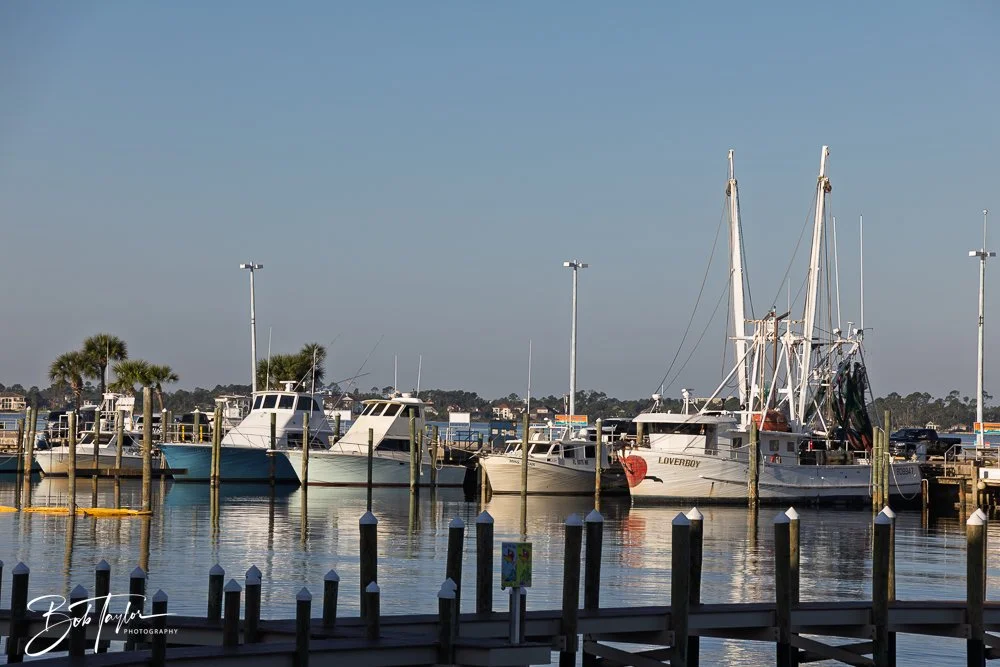
History of St Andrews Marina
The Long Story of St. Andrews Marina: From a Working Wharf to a Rebuild After the Storm
If you spend enough time in St. Andrews, you eventually realize something important: this marina has lived more lives than most people do. Long before the first yacht tied up here, long before fishermen unloaded red snapper to cheering crowds, long before charter boats filled the basin with diesel smoke and excitement—this waterfront was already shaping the identity of the community around it.
Today, as St. Andrews Marina rises again from the devastation of Hurricane Michael, it’s worth looking back at the full arc of its history. Not just the marina we know now, but the docks, wharves, people, storms, and decisions that built it—and rebuilt it—again and again.
This is the long story of St. Andrews Marina.
Before There Was a Marina: Ware’s Wharf and a Working Waterfront
St. Andrews began as a working waterfront, not a recreational one.
In the late 1800s, brothers Lambert and Francis Ware established Ware Mercantile and Ware’s Wharf on the shoreline near today’s marina. Schooners and steamers like the SS Tarpon stopped here regularly, delivering freight, taking on fish, and carrying passengers between Mobile, Apalachicola, and the small settlements growing around St. Andrews Bay.
People came for salt, fish, and the “healthy sea baths” advertised in newspapers of the era. What existed at the marina site wasn’t a marina at all—it was a lifeline.
A place of work.
A place of survival.
A place where St. Andrews started to matter.
1958–1960: The Birth of a Municipal Marina
The modern era began in the late 1950s.
In 1958, Panama City created the uplands that still define the basin today. Over the next two years, the city built what would become St. Andrews Marina, offering:
100+ slips for commercial and recreational boats
Fuel, showers, laundry, and pump-out services
A public boat ramp
24/7 operations
By 1959–1960, St. Andrews officially had a true marina—and it immediately became the heart of the district.
For decades, shrimpers, long-time commercial fishing families, and growing numbers of recreational cruisers shared the basin. The marina’s position between the bay and the Intracoastal Waterway made it a natural stopping point. Visitors often came to St. Andrews specifically to watch boats unload.
You didn’t have to own a boat to enjoy the marina.
You just had to show up at the right time of day.
St. Andrews Marina Becomes a Community Anchor
Over the next several decades, St. Andrews Marina wasn’t just a dock—it was a barometer for the local economy.
When commercial fishing thrived, the marina buzzed with activity.
When tourism rose, more charter boats operated from its slips.
When Panama City Beach exploded in popularity, St. Andrews evolved into a quieter, more character-rich alternative.
By the late 20th century, the marina was surrounded by restaurants, shops, and public spaces. Families walked the docks in the evenings. Locals bought shrimp straight from the boats. Charter captains became local celebrities. The marina wasn’t just infrastructure—it was culture.
And in 2001, the city invested in a major renovation to update docks, utilities, and facilities.
The stage was set for the next chapter.
October 10, 2018: Hurricane Michael Changes Everything
Then came Hurricane Michael.
A Category 5 storm doesn’t spare anything in its path—and the marina was no exception.
Michael ripped apart:
Docks
Bulkheads
Pilings
Power pedestals
Fuel and water systems
Boats tied up in the basin
Some vessels sank. Others washed onto docks or into the uplands. The marina was left battered and broken, operating for a time in “survival mode”—as one city official put it, “held together with duct tape and string.”
Yet St. Andrews being St. Andrews, commercial boats kept running as best they could.
But it was clear: the marina couldn’t simply be patched. It needed to be rebuilt.
2019–2022: Visioning, Planning, and Reimagining the Marina
Instead of rushing into repairs, Panama City stepped back and began a multi-year planning effort.
2019–2021: Public workshops, visioning sessions, and meetings shaped a new master vision for the marina and surrounding CRA district.
2021: Engineers surveyed dock structures, utilities, and bulkheads to determine what could be salvaged—and what couldn’t.
2022: FEMA funding pathways were reviewed, and schematic designs for the marina rebuild were drafted.
These weren’t small steps. The city was trying to rebuild a marina and preserve St. Andrews’ soul.
What emerged was a vision:
A modern working waterfront that still honors its history.
2023–2024: A Public-Private Partnership Is Born
Then came the biggest shift.
June 2023
The city received an unsolicited proposal from St. Andrews Marina Partners, LLC (SAMP)—a private firm offering to help rebuild and operate the marina.
July–November 2023
Competing proposals arrived. After reviews, public presentations, and debate, the city selected SAMP as the preferred partner.
December 12, 2023
The city signed an Interim Agreement with SAMP.
Key points:
The city keeps ownership of the land and water.
SAMP assists with design, permitting, construction, and eventual operations.
The marina will remain a public resource with public access.
The partnership must support both commercial boats and recreational users.
The project includes modern docks, utilities, strengthened bulkheads, and a phased return to full operations.
Then came the money:
A roughly $25 million rebuild, shared between the city and SAMP.
City leaders—including Commissioner Josh Street—insisted on a fair, balanced agreement, with transparency and community priorities built into the deal.
The final product?
A framework for a publicly owned, privately operated marina that preserves public access and local control.
2024–Present: The Rebuild Begins
In October 2024, the first pile for the new docks was driven. City officials, SAMP, contractors, and community members gathered at the basin—marking the official restart of a marina that had limped along for nearly six years after Michael.
The rebuild includes:
New floating and fixed docks
Upgraded utilities and safe access
Rebuilt bulkhead wall
More resilient infrastructure
Space for commercial fishing, charter boats, and transient recreational vessels
Construction is underway today, and the project is expected to return the marina to full function over multiple phases.
Why This Marina Still Matters
St. Andrews Marina has always been more than slips and seawalls.
It’s been:
A working port
A community gathering place
A symbol of St. Andrews’ resilience
The anchor of a historic waterfront village
It was built, rebuilt, and reinvented more than once—and it’s happening again right now.
But through all its changes, one thing has remained the same:
The marina is the heart of St. Andrews.
It always has been.
And as the rebuild continues, it still is today.