Why St. Andrews?
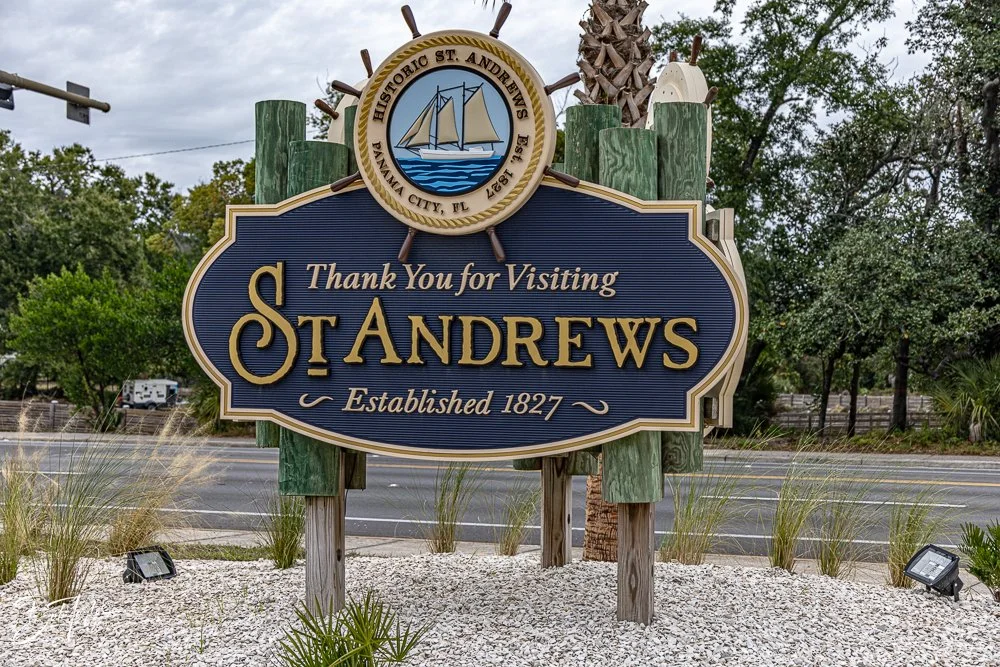
Why St. Andrews?
A Bay, a Community, a Park… and a Name We Never Questioned
If you grew up anywhere near St. Andrew Bay—whether you’re a Cove kid, a Beach Drive walker, and East side Callaway, Parker or Springfield kid, a Beck Avenue wanderer, or one of the thousands who spent half a childhood at St. Andrews State Park—you’ve said the name “St. Andrews” more times than you could ever count.
It just rolls off the tongue.
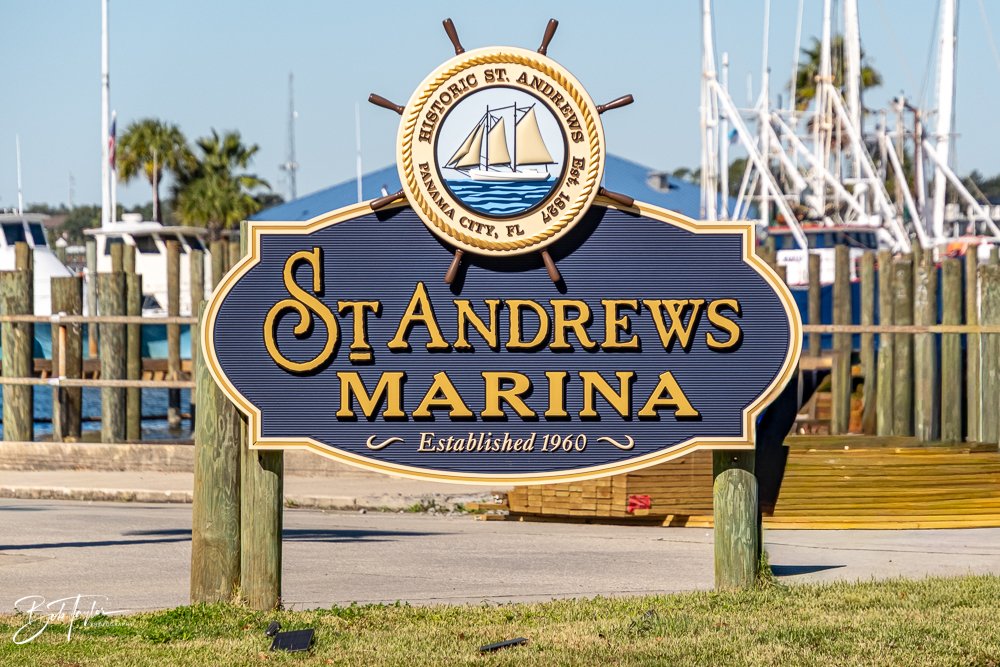
St. Andrews Bay. St. Andrews marina. St. Andrews the community. St. Andrews State Park.
We’ve said it so long that most of us never stopped to ask the most basic question:
Why St. Andrews? Who picked that name? And who was St. Andrew in the first place?
Here’s the story—one that reaches back centuries, involves a boat, a map, and a saint most Floridians never think about—and suddenly explains why our home carries this name.
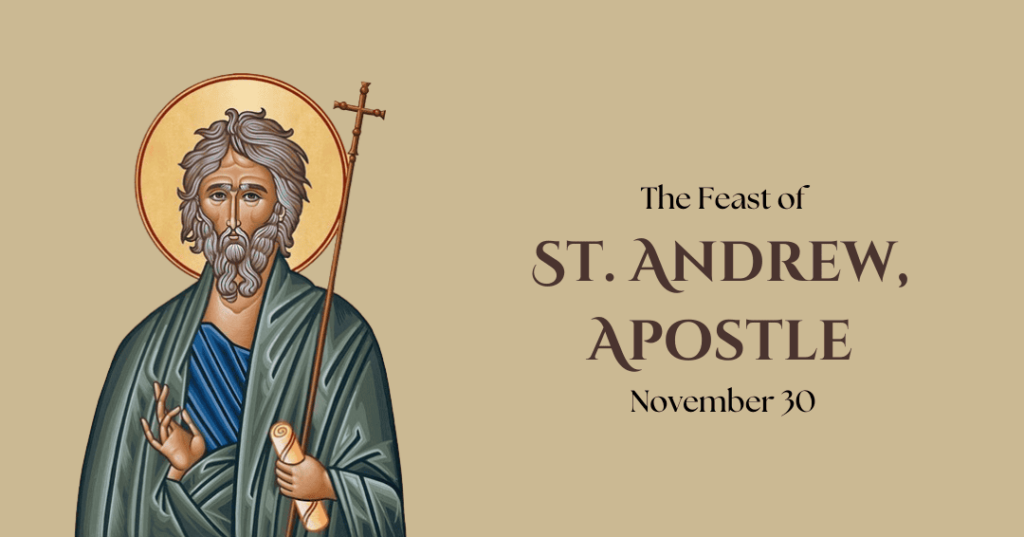
The Saint Behind the Name (and no, he never set foot here)
St. Andrew the Apostle was one of the twelve disciples of Jesus, the brother of Peter, and is honored as the patron saint of fishermen, Scotland, Russia, and Greece. His symbol is the X-shaped cross on which he was martyred. His feast day? November 30.
That date matters more than you might expect.
Because while St. Andrew has deep theological history, he has absolutely none in Florida.
No Spanish mission. No shipwreck. No miraculous event on our shores.
Yet his name landed here anyway.
How Early Explorers Named Everything
When Spanish sailors explored the Gulf Coast in the 1500s–1700s, they charted bays, rivers, and inlets using a simple, well-worn system:
Name the location after the saint’s feast day closest to the date you spotted it,
orGive it a familiar saint’s name to label the map quickly.
This is why Florida is dotted with San Joses, San Pedros, San Marcos, and Santa Rosas. It wasn’t personal—it was practical.
So somewhere in that age of wooden ships and hand-drawn charts, a Spanish navigator sailed along our part of the northern Gulf, looked into this deep, beautiful bay, and wrote down:
Bahía de San Andrés — St. Andrew’s Bay.
No fanfare. No ceremony. Just ink on parchment.
But that single decision would outlive every settlement, every flag, and every mapmaker who followed.

The Name Stuck—Long Before We Got Here
By the early 1800s, when American settlers began carving out little communities around the shoreline—St. Andrew, Millville, Parker, Old Town—the name St. Andrew Bay was already in standard use.
Naturally, one of those settlements took the bay’s name as its own. Over time, it evolved from:
St. Andrew → St. Andrews
That extra “s” was common back then. It made the place sound like a district rather than a single point on a map.
And it stuck.
Why the Park Took the Name Too
When Florida created St. Andrews State Park in the 1940s using former military reservation land at the pass, there wasn’t even a question of what to call it.
The bay was St. Andrew Bay.
The local community was St. Andrews.
The peninsula had been tied to that name for generations.
So the new park simply inherited the identity that had been attached to the landscape for well over a century.
Today, the park is one of Florida’s most-visited—yet the name above the entrance gate still traces back to a moment a long-ago mariner dipped his quill and labeled the map.
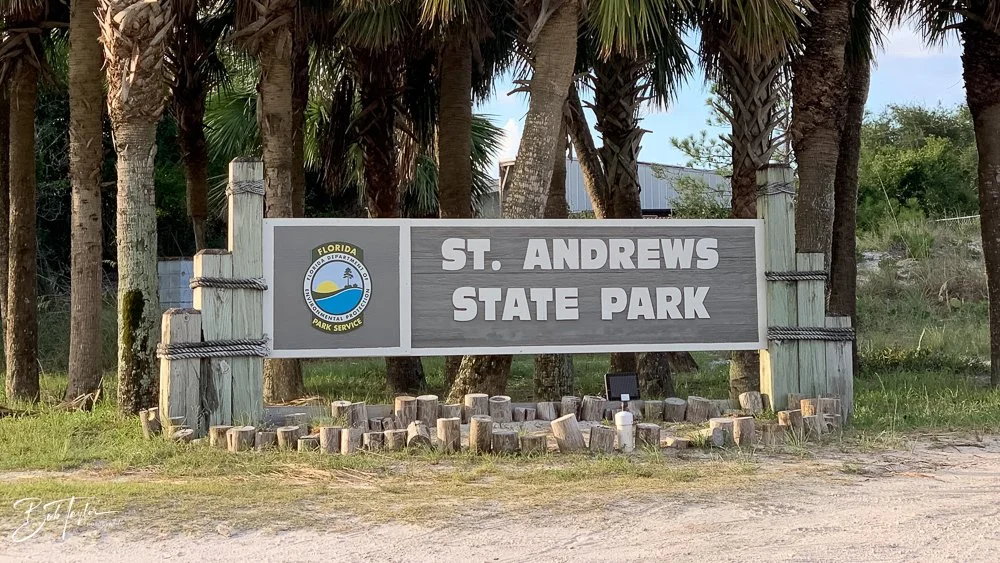
The Name We Grew Up With
Most of us never once questioned the name “St. Andrews.” Why would we?
We fished the piers as kids,
took swim lessons in the lagoon,
camped under the pines,
crossed the Hathaway bridge to “go to St. Andrews,”
or just grew up hearing our parents say, “We’re heading to St. Andrews today.”
It’s our place. Our identity. Our shorthand for home.
But the name that feels so local—so ours—actually comes from far across the ocean, applied by someone who had no idea this would one day be a thriving community, a beloved park, and a hometown to generations.
So… Why St. Andrews?
Because a long time ago, a Spanish explorer labeled our bay “San Andrés.”
Because settlers kept the name.
Because the community embraced it.
Because the park inherited it.
Because the name lasted longer than anything else here.
And because sometimes the simplest explanation is also the most charming:
Our home is named after a fisherman saint—fitting, in a place where fishing has shaped nearly every chapter of local life.
Not bad for a name most of us never even questioned.